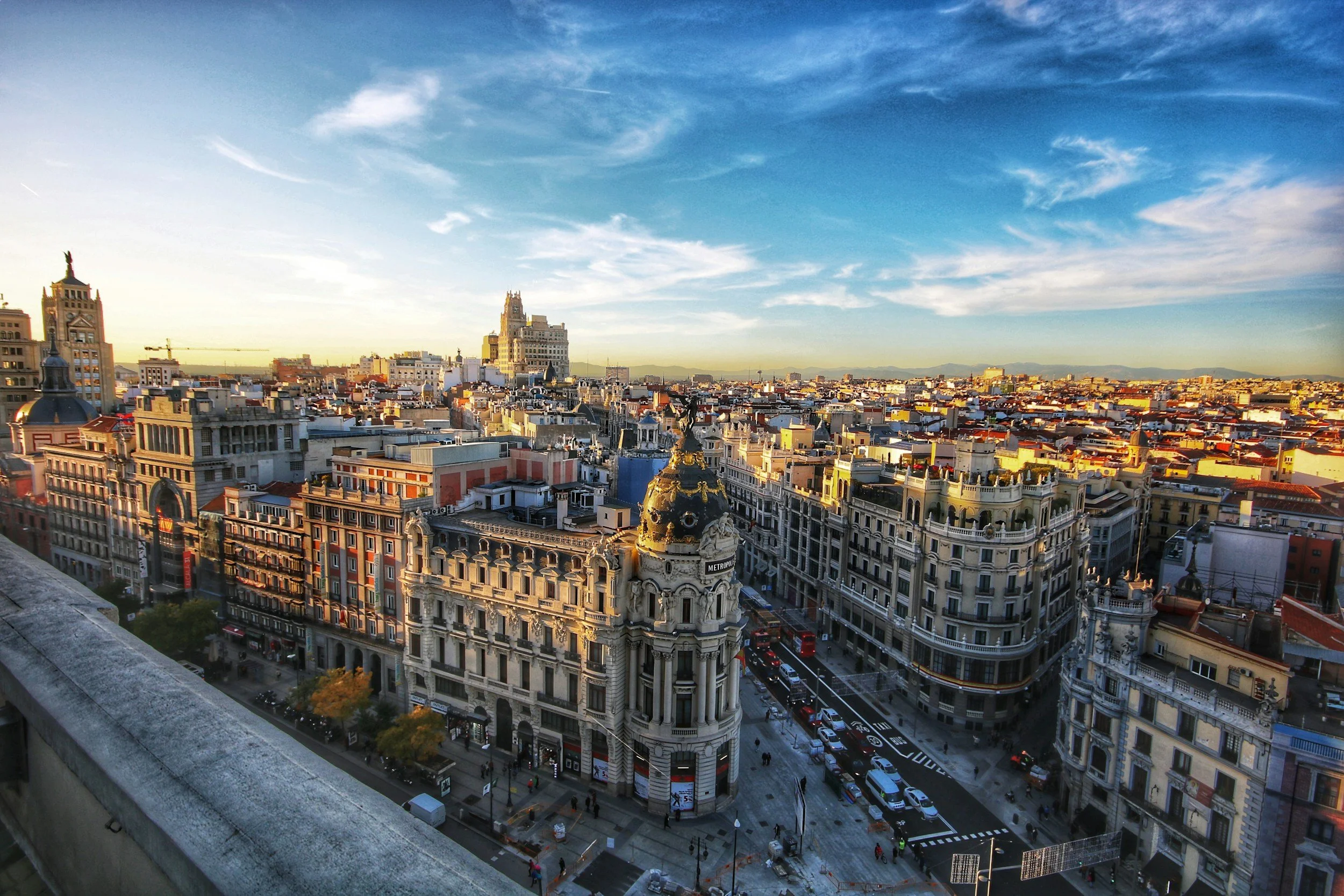
The late afternoon sun in Madrid doesn’t simply lower itself toward the horizon; it performs a deliberate, golden alchemy. It catches the weathered clay tiles of Barrio de las Letras, melting the harsh mid-day heat into a warm, honeyed glow that seems to spill down the narrow, sloping alleys. If you stand at the corner of Calle de Huertas just as five o’clock strikes, you will feel the city shift its weight. The frantic pace of the afternoon dissolves, replaced by the rhythmic clinking of glassware, the soft murmur of conversation spilling from open balcony doors, and the unmistakable pull of a neighborhood that has spent four centuries mastering the art of living well.
Welcome to Barrio de las Letras—the Literary Quarter. To walk these cobblestone streets during the golden hour is to step into a living narrative where history is not kept behind velvet ropes, but etched into the brass lettering embedded in the pavement beneath your boots. Here, the ghost of Miguel de Cervantes once traded barbs with his fierce rival Lope de Vega. Yet, for all its historic weight, Las Letras never feels like a museum. It feels like an open invitation.
The Threshold of Light and Shade
Start your walk at Plaza de Santa Ana. In the full glare of noon, the plaza can feel expansive and bustling, dominated by the statues of playwrights Calderón de la Barca and Federico García Lorca. But as the shadows lengthen, the square transforms into an intimate, open-air theater.
The light here does something magical: it paints the cream-colored plaster of the surrounding 19th-century facades in shades of amber and rose. Locals begin to claim their perches on the outdoor terraces, not out of obligation, but out of a deep-seated reverence for the transition between work and evening.
Sit for a moment. Order a glass of crisp vermut de grifo (tap vermouth), served cold over ice with an orange slice and an olive. Watch how the waiters navigate the dense maze of small marble tables with effortless grace, carrying trays balanced high above their shoulders. There is no rush here. In Madrid, the golden hour is an untouchable sanctuary—a dedicated pause where time slows to the speed of a good conversation.
Verses in Brass and Timber
Leaving the plaza behind, wander down Calle de Huertas, the pedestrian artery that winds through the heart of the quarter. Look down as you walk. Embedded directly into the polished stone underfoot are quotes from Spain’s greatest literary figures, rendered in gleaming brass:
"El que lee mucho y anda mucho, ve mucho y sabe mucho." ("He who reads much and walks much, sees much and knows much.") — Miguel de Cervantes
The genius of Las Letras is how seamlessly these high-minded literary traditions fold into everyday acts of hospitality. Slip into one of the neighborhood's historic tabernas, where the doorways are framed by hand-painted ceramic tiles depicting scenes from Don Quixote.
Inside, the scent of sizzling garlic, aged jamón Ibérico, and oak wine barrels fills the air. Behind the zinc bar, a bartender who has worked the same taps for thirty years greets a regular with a warm pat on the shoulder, sliding a small saucer of freshly fried marcona almonds across the counter before an order is even spoken. This is the heart of Spanish hospitality: it is not performative, nor is it fussed over. It is intuitive, generous, and deeply human. You aren't just a customer; for the twenty minutes you stand at the bar, you are part of the ecosystem of the room.
Plaza de Santa Ana sits at the center of it all, historically serving as the beating heart of Spanish Golden Age drama. Today, that theatrical past lives on in its vibrant open-air terrace culture, where long tables, clinking glasses, and lively conversation fill the square from late afternoon well into the night.
Winding away from the plaza is Calle de Huertas, the main promenade once walked by 17th-century writers. Today, it has been transformed into a peaceful pedestrian sanctuary, lined with independent cafes and brass poetry inlays embedded directly into the cobblestones underfoot.
Tucked away on a quieter side street lies the Casa-Museo Lope de Vega, the former home of the famous playwright from 1610 to 1635. Step past its modest facade to discover quiet, hidden courtyard gardens that offer a cool, fragrant escape from the bustling city outside.
Finally, no visit to the quarter is complete without slipping into Taberna Los Gatos, a traditional gathering place that has long drawn artists, writers, and locals. Inside, you'll find an eclectic, bustling tapas and vermouth bar where aged wooden barrels, vintage decor, and generous hospitality capture the timeless soul of Madrid.
The Secret Courtyards
As you venture deeper into the grid of side streets—Calle del León, Calle de Cervantes, Calle de San José—the city grows quieter. The light begins to tilt from amber into a rich, deep violet.
Push open an unpretentious wooden door tucked between an artisan leather shop and a small bookstore, and you might find yourself catching a glimpse of a hidden interior patio. These private courtyards, wrapped in wrought-iron balconies trailing green ivy, are where the neighborhood keeps its quietest secrets.
In the early 1600s, these spaces hosted corrales de comedias—open-air theaters where rich and poor alike gathered under the sky to watch new plays unfold. Today, that spirit of communal assembly endures in the tiny, independent ateliers, vintage print shops, and cozy cafes that line the side streets.
Step into a tiny neighborhood bodega where the proprietor still logs the day's special on a small blackboard. Ask for a recommendation, and you won't get a rehearsed pitch—you'll get a story. You'll hear about the small vineyard in Toledo that produced the wine, the family that cures the cheese in the mountains of Asturias, and why this particular pairing belongs on your table tonight. The generosity of spirit here is tangible; it turns a simple meal into an act of welcome.
Following the Twilight Home
By the time night officially takes hold, the street lanterns flick on, casting soft yellow pools across the cobblestones. The brass quotes underfoot catch the glow, guiding your steps toward the edge of the neighborhood where Las Letras meets the grand, tree-lined expanse of the Paseo del Prado.
To walk through Barrio de las Letras during golden hour is to understand that Madrid’s greatest masterwork isn't hanging in a gallery. It is written in the way the light hits an old brick facade, the way a stranger holds a door open with a genuine smile, and the shared understanding that the night is young, the table is set, and there is always room for one more.